
Locker Revenue Share vs. Buying: Which Fits Your Venue?
By Storage Lockers team · Published October 23, 2026
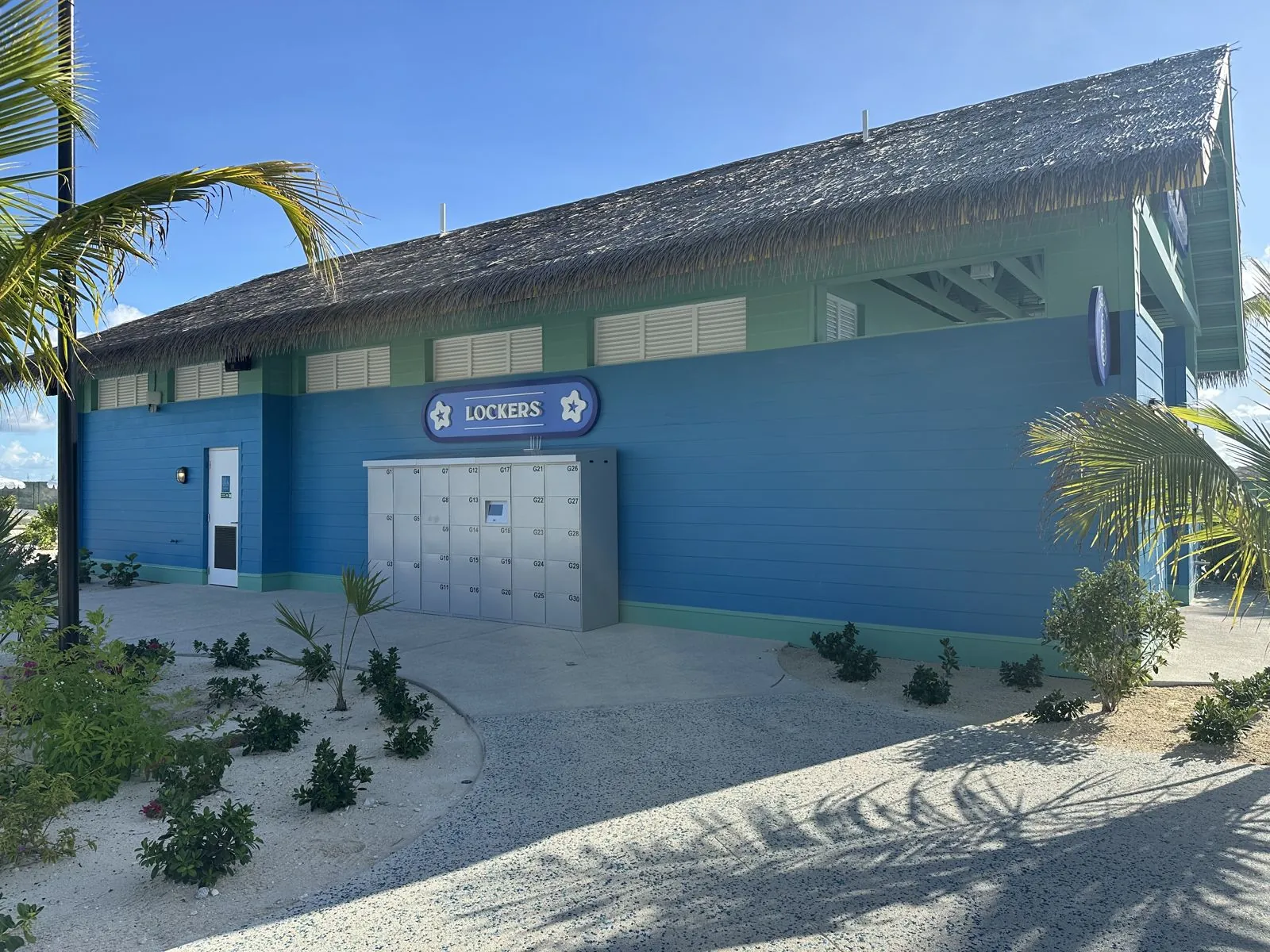
A locker revenue share is a concession model: the locker partner pays for the hardware, installation, software and ongoing service, and in exchange takes an agreed percentage of every rental your guests pay. You keep the rest, with zero capital outlay. Buying the lockers outright flips it — you fund the equipment and keep 100% of the income, but you also carry the service, software and payment-processing costs. Which one is right depends on your guest volume, your season length, your capital budget and how much control you want over pricing.
This guide breaks down who pays for what under each model, how splits are typically structured, and which venue types suit each. Final terms are always confirmed in a written proposal — nothing below is a rate card.
What is a locker revenue share?
A locker revenue share is an agreement where the supplier installs, operates and maintains keyless lockers at no upfront cost to the venue, and the two parties split the rental income on an agreed percentage for a fixed contract term. The venue provides the space, power and data; the supplier provides the hardware, software, payments and service.
The model isn't new — concession operators have run it on locker banks for years, and vendors across the category advertise systems "installed, operated and maintained free-of-charge for a share of the ongoing revenue" (The Locker Network). What has changed is the technology underneath it: keyless, app- and kiosk-driven units with cashless payment and remote monitoring, which is why operators also describe revenue share plans as a way to install "the latest electronic keyless lockers with no money needed upfront" (VLocker).
It's worth noting the category is growing fast, which is why more suppliers are willing to fund hardware: the global locker market was estimated at about USD 3.22 billion in 2025 and is forecast to reach USD 10.76 billion by 2035, a 12.82% CAGR (Market Research Future). The smart-locker slice specifically was valued at USD 2.1 billion in 2023 with growth to USD 3.6 billion by 2028 at an 11.6% CAGR (MarketsandMarkets).
Who pays for what: locker revenue share vs. buying
This is the question that settles most decisions. Use the table as your checklist when comparing proposals — and make sure each line is written into the contract rather than assumed.
| Cost line | Revenue share | Purchase |
|---|---|---|
| Locker hardware and doors | Storage Lockers | Venue (one-time capex) |
| Freight and delivery | Storage Lockers | Venue or quoted in project |
| Installation and anchoring | Storage Lockers | Venue or quoted in project |
| Power and data to the location | Venue (site prep) | Venue (site prep) |
| Kiosk / app / PIN software platform | Storage Lockers | Usually an annual software fee |
| Payment processing (card fees) | Netted out before the split | Venue pays on its own merchant account |
| Preventive maintenance and parts | Storage Lockers | Venue, or a paid service plan |
| Staff training and signage | Storage Lockers | Included at launch; refreshers quoted |
| Software updates and hardware refresh | Storage Lockers over the term | Venue decides and funds |
| Usage and financial reporting | Storage Lockers | Included with the platform |
| Share of rental income | Split per agreement | 100% to venue |
The honest trade-off: a no cost locker program removes capex, risk and labour, but you give up a slice of the income permanently. A purchase costs money now and keeps all the income later — if you're prepared to own uptime, spares, card fees and eventual replacement. For a breakdown of what the hardware side actually runs, see how much smart lockers cost.
How locker revenue share splits are structured
There's no industry-standard percentage, and anyone quoting one without seeing your site is guessing. What is standard is the set of variables that determine the split. Expect a proposal to address all of these:
- Gross vs. net revenue. Is the split calculated on gross rentals or after payment processing and taxes? Net is more common and more transparent — ask for the definition in writing.
- Volume and footprint. More guests and more doors mean better economics for the funding partner, which usually means a better share for the venue.
- Season length. A 90-day water park season and a 365-day transit hub have very different payback periods on the same hardware.
- Capital intensity of the install. Outdoor, weather-rated, high-door-count walls with trenching cost more to deploy than an indoor bank on existing power.
- Term length. Longer terms let the partner amortise hardware over more seasons, which typically improves your share.
- Pricing control. Who sets the rental price, and can it change mid-season for events or peak days?
- Minimums or guarantees. Some agreements include a minimum annual payment to the venue; others are pure percentage.
- Right-sizing clauses. Good concession operators add doors as demand grows rather than letting queues form — competitors describe adding lockers at no cost when attendance rises (The Locker Network).
- Reporting cadence. Monthly utilisation and financial reporting is the norm in the category (VLocker); daily dashboards should be table stakes.
- Exit and removal. Who removes the units at the end of term, who patches the floor, and what happens if the venue renovates?
All Storage Lockers terms — percentage, term, door count and service levels — are confirmed in the written proposal for your specific site. You can see how our program is structured on the locker revenue share page.
Which venues suit a locker concession, and which should buy?
| Venue type | Usually better fit | Why |
|---|---|---|
| Water parks and theme parks | Revenue share | High seasonal volume, strong per-guest attach rate, large door counts, outdoor hardware wear |
| Beaches and resort day-use areas | Revenue share | Seasonal peaks, guests already in transaction mindset, our beach lockers at Celebration Key are this profile |
| Stadiums and arenas | Revenue share | Event-driven spikes, bag policy demand, little appetite for capex outside the capital plan — our arena locker wall in Montreal sits in this category |
| Festivals and touring events | Revenue share | Temporary installs, no permanent asset to own |
| Zoos, aquariums, museums | Either | Moderate attach rate; revenue share if capex is tight, purchase if traffic is steady year-round |
| Airports and train stations | Either | Long dwell, year-round demand; many run as a concession, like our airport luggage locker wall in Oslo |
| Hotels | Either | Lower volume per door; purchase often makes sense when lockers are an amenity, not a profit centre |
| Gyms and workplaces | Purchase | Lockers are usually free to members or staff, so there's no rental income to share |
The rule of thumb: revenue generating lockers — where guests pay per use — are candidates for a concession. Lockers you provide free as an amenity or a staff tool have no revenue to split, so you buy them. Browse configurations on our products page.
Illustrative example: comparing the two models
Illustrative only — round numbers, not a quote or a projection.
Assume a seasonal attraction with 500,000 annual guests, a 2% locker attach rate (10,000 rentals) and a $15 average rental.
- Gross locker revenue: 10,000 × $15 = $150,000
- Revenue share at an illustrative 50/50 net split: roughly $75,000 to the venue, $0 capex, $0 service cost, $0 card fees
- Purchase route: assume $100,000 all-in for hardware and install, plus an annual software and service allowance and card fees. Year one nets less than the concession; year three onwards the venue is ahead, provided utilisation holds and nothing major needs replacing.
That crossover point is the whole decision. If your attendance is stable, your season is long and your capital committee will approve the spend, buying usually wins over a 5–7 year horizon. If attendance is unproven, seasonal or you simply can't win the capex fight this year, a locker concession converts an uncertain investment into guaranteed margin from day one. Model your own numbers with our venue locker ROI breakdown.
Nine questions to ask any locker revenue share vendor
- What exactly is the split percentage, and is it on gross or net revenue?
- Who absorbs card processing fees, chargebacks and refunds?
- What's the contract term, and what are the renewal and early-exit terms?
- What response time is guaranteed for a jammed door or offline kiosk, and is it in writing?
- Who handles guest support when someone forgets a PIN mid-event?
- Will you add doors at no cost if utilisation hits a threshold?
- Do I control pricing, or do you? Can we run event-day or peak pricing?
- What reporting will I get, how often, and can my finance team export it?
- Who owns the hardware at end of term, and who pays to remove it?
If a vendor won't answer 1, 2 and 9 in writing before you sign, treat that as the answer.
Common mistakes operators make
Choosing on percentage alone. A higher share on a system that's offline during your busiest weekend earns less than a lower share with guaranteed uptime and local service. Service levels move more money than two or three points of split.
Underestimating card fees. Cashless is the norm in smart lockers, and processing is a real line item. Clarify whether it comes off the top or off your share.
Ignoring site prep. Power and data runs, floor anchoring and weather protection are usually the venue's responsibility under both models. Get them scoped early so they don't blow up a "no cost" narrative.
Buying too few doors. Under-provisioning creates queues, kills attach rate and makes lockers look like a failed experiment. Concession partners have a financial incentive to size correctly — use that to your advantage.
Frequently asked questions
Is a locker revenue share really a no cost locker program?
For hardware, installation, software and service, yes — those are funded by the locker partner. The venue still provides space, power and data, and gives up a share of rental income, so it's better described as zero-capex rather than zero-cost.
What is a typical locker revenue share split?
There's no published industry standard, and splits vary widely with door count, guest volume, season length and install complexity. Any credible partner will quote a specific percentage and term in a written proposal after reviewing your traffic data and site plan.
Can we switch from a revenue share to buying the lockers later?
Often yes — many agreements include a purchase or buyout option at defined points. Ask for that clause to be written into the original contract rather than negotiated later, when you've lost leverage.
Do revenue generating lockers work in venues that already offer free storage?
They can, but only if there's a clear value difference: secure, climate-protected, keyless, in-and-out access near the attraction entrance. If free cubbies already meet guest needs, a locker concession will struggle to hit an attach rate that justifies the footprint.
Who is liable if a guest's belongings go missing?
Liability is defined in the agreement and in the guest terms accepted at the kiosk or in the app. Review this carefully with your risk team under either model, because ownership of the hardware and ownership of the liability aren't always the same thing.
Next steps
Send us your attendance numbers, season length and a site plan, and we'll model both routes side by side — concession and purchase — with the split, term and service levels confirmed in writing. Get a quote or book a call to walk through the numbers with our team.
Sources
Planning lockers for your venue?
Tell us about your site and we'll recommend a configuration and commercial model.