
How Many Lockers Does a Water Park Need? Sizing Guide
By Storage Lockers team · Published October 23, 2026
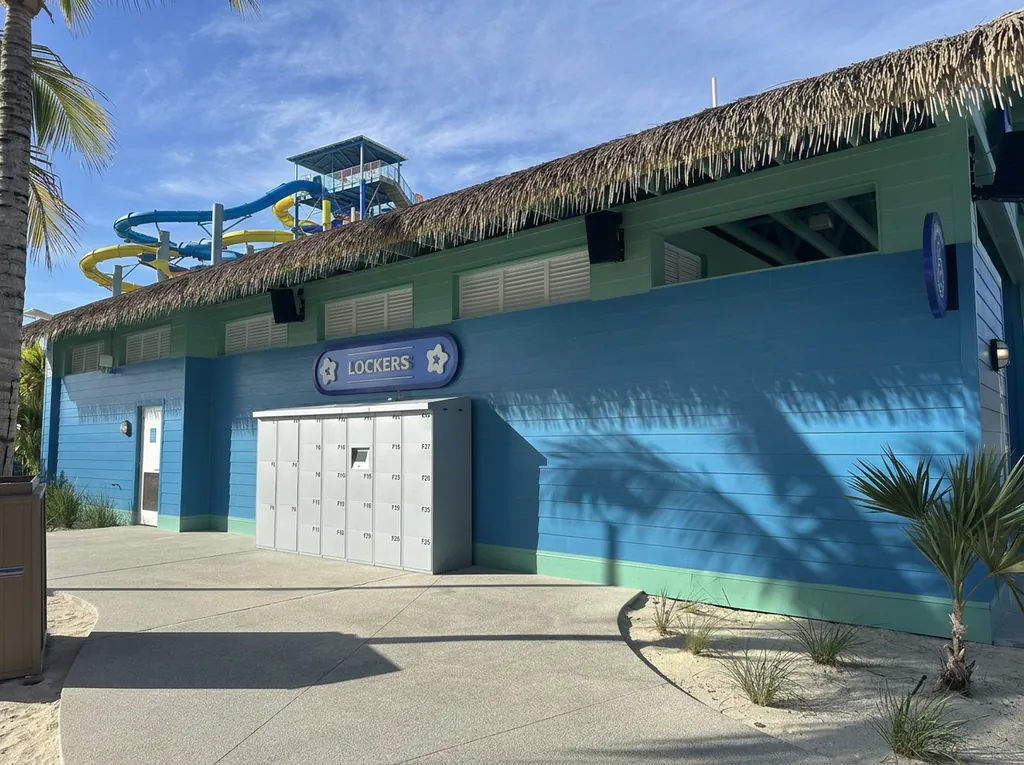
How many lockers does a water park need? As a planning rule, size the bank at roughly 6–9 locker doors per 100 guests on your design day — not your average day and not your record day. The precise number comes from a five-step calculation: design-day attendance, average party size, capture rate, peak concurrency and an out-of-service buffer.
That range covers most outdoor day parks. Indoor waterpark resorts, where guests have a hotel room to drop bags in, usually land lower. Parks with a strict no-bags-on-slides policy and ride-side phone lockers land higher. Below is the method, the trade-offs and an illustrative example you can copy into a spreadsheet.
How many lockers does a water park need? The short answer
Multiply design-day attendance by your capture rate, divide by average party size, multiply by the share of rentals in use at the same time, then add 10–15% for maintenance and size mismatch. For a 6,000-guest design day at a 25% capture rate, that typically works out to roughly 450–500 doors.
Step 1: Pick a design day, not an average day
Average attendance under-builds. Your single busiest day over-builds and leaves capital idle for 90 days a season.
Use the design day: the attendance figure you hit on roughly the 85th–90th percentile day of your operating calendar. In practice that is a hot Saturday in mid-July, not the Fourth of July. Sizing to the design day means you run near-full on a handful of days and comfortably on the rest.
Pull it from gate data. If you are a new build, use the feasibility study's design-day figure — the same number your food and beverage and restroom counts were sized from. Context helps here too: the US and Canada had 1,199 waterparks as of February 2023, concentrated in the Midwest (426) and South (400), where longer outdoor seasons stretch the number of design-level days you will actually see (Hotel & Leisure Advisors).
Step 2: Convert attendance into rental parties
Guests do not rent lockers one per head. Families share. Divide design-day attendance by average party size to get the number of decision-making groups.
Most outdoor waterparks see average party sizes between 2.5 and 4. Get this from ticketing data — transactions per day divided into admissions is a close enough proxy. Resort waterparks skew to larger family groups; municipal facilities skew smaller.
This step matters more than any other. Using heads instead of parties will roughly triple your locker count and wreck the business case.
Step 3: Apply a realistic capture rate
Capture rate is the share of parties that rent. It is the single biggest lever you control, and it is driven by policy as much as by demand.
These are planning starting points based on operator experience — not published research. Replace them with your own POS data as soon as you have a season of it:
| Park type / policy | Starting capture rate |
|---|---|
| Outdoor day park, bags allowed on deck | 15–22% of parties |
| Outdoor day park, no loose articles on major slides | 25–35% |
| Indoor waterpark resort (hotel rooms nearby) | 8–15% |
| Municipal / community aquatic centre | 10–18% |
| Park with all-day single-fee locker access across zones | 30–40% |
What pushes capture up: a clear no-loose-articles rule at slide towers, visible pricing, cashless payment, and an all-day re-open model so guests can grab sunscreen and a phone without paying twice. The Locker Network, for instance, markets an all-day pass concept that gives guests access to a locker at every major ride for one fee — a structure that raises willingness to pay because the locker follows the guest around the park (The Locker Network).
What pushes capture down: cash-only kiosks, long queues at a single bank, and free alternatives like unsecured cubbies next to the wave pool.
Step 4: Adjust for concurrency and turnover
Two numbers finish the calculation.
Concurrency is the share of the day's rentals that are occupied at the same moment. Waterpark rentals are overwhelmingly all-day — the Waterpark at Wild Island, for example, sells standard, large and jumbo lockers as full-day rentals paid by card (Wild Island). With all-day pricing, assume 75–85% concurrency at the 1pm–3pm peak.
Turnover (turns per door per day) only helps if you sell short-duration rentals. All-day product: 1.0–1.3 turns. Hourly or ride-side phone lockers: 4–8 turns. If you run a hybrid, calculate the two zones separately — do not blend them, or you will under-build the all-day bank.
Trade-off worth naming: all-day pricing yields a higher average transaction value and simpler guest messaging, but it forces you to buy more doors because nothing recycles. Hourly pricing squeezes more revenue from fewer doors but generates more support contacts and more overstay disputes.
Step 5: Add a buffer and round to full towers
Add 10–15% on top of peak concurrent demand for:
- Doors out of service for cleaning, damage or battery swaps
- Size mismatch (every jumbo is full while smalls sit empty)
- Growth headroom — the global water parks market is forecast to grow at a 7.7% CAGR, so a bank sized exactly to today will be tight in three seasons (Market.us)
Then round up to whole towers. Lockers ship as modular columns, so a calculated 437 becomes 448 or 480 depending on configuration. See our product range for typical door counts per tower.
Illustrative worked example
The following is illustrative, using round numbers. Substitute your own data.
| Input | Value |
|---|---|
| Design-day attendance | 6,000 |
| Average party size | 3.0 |
| Parties on site | 2,000 |
| Capture rate | 25% |
| Rental transactions | 500 |
| Peak concurrency | 80% |
| Concurrent doors in use | 400 |
| Buffer (15%) | +60 |
| Total doors required | ≈460 → 480 installed |
That equals 8 doors per 100 design-day guests. Add a separate 60–80 small doors at slide towers if you enforce a no-loose-articles rule, sized on ride throughput rather than gate attendance.
To turn a door count into a financial case, pair this with the venue locker ROI breakdown and our guide to how much smart lockers cost.
Water park locker sizing: getting the size mix right
A bank of identical doors fails twice — families cannot fit a cooler bag, and solo guests overpay for space they don't use. Three sizes is the practical standard, matching the standard/large/jumbo structure most parks use.
| Size | Typical use | Share of doors |
|---|---|---|
| Small (phone/valuables) | Phone, keys, wallet, ride-side storage | 20–25% |
| Medium (day bag) | Towel, clothes, sandals, sunscreen | 50–55% |
| Large / family | Multiple towels, cooler bag, stroller items | 20–25% |
Start there, then re-balance after one season using occupancy data by size. Smart systems log which sizes sell out first and when — that reporting is the main reason to avoid mechanical coin locks.
Material spec matters as much as the count. Waterpark lockers sit in constant chlorine spray, sunscreen residue and humidity, so corrosion-resistant, rust-free construction is a baseline requirement rather than an upgrade (Tixera).
Where to place water park lockers
Split the bank across three or four zones rather than building one wall at the gate. A single mega-bank creates a 20-minute queue at 11am and a dead walk for guests at the back of the park.
- Entry / turnstile plaza — 50–60% of doors. Captures guests at the moment they are carrying the most. Place after bag check, before the first restroom.
- Wave pool and main deck — 20–25%. This is where parties settle for the day and realise they need somewhere for phones. High-visibility placement here lifts capture materially.
- Cabana and slide tower zones — 15–20%. Cabana guests want valuables storage near their rental; slide towers need small doors for phones where loose articles are banned.
- Secondary gate or parking-side bank — remainder. Useful at parks with a long walk from the lot.
Every bank needs a payment path that does not depend on staff. Guests should be able to scan a QR code on the door itself or use a kiosk, with card or wristband payment — the same cashless rail that already runs tickets and food and beverage (CORE Cashless). Integrating locker payment with an existing RFID wristband removes the lost-key problem entirely.
For layout drawings and power/network requirements by zone, see our water park locker system checklist and the water parks industry page.
What to ask vendors before you commit to a count
- What happens to the door count if my capture rate comes in 10 points lower than modelled — can towers be relocated between zones?
- Are locks marine-grade and what is the stated design life in a chlorinated outdoor environment?
- Can guests re-open the same locker unlimited times during the day without paying again?
- Does the system report occupancy by size, by zone, by hour — and can I export it?
- What is the fallback when Wi-Fi drops mid-afternoon on a full day?
- Who funds the hardware, and what does the split look like under a revenue share versus outright purchase?
If capital is the constraint, note that a revenue-share model lets you install to peak demand rather than to budget — which matters most for exactly the zones you would otherwise cut. Our comparison of revenue share vs. buying walks through when each makes sense.
One last consideration for resort operators: waterpark amenities have been associated with meaningfully higher RevPAR at hotels that add them (H&LA / WhiteWater). If your waterpark is an amenity rather than the gate, treat lockers as a guest-satisfaction line item first and a revenue line second, and model capture at the lower end.
Frequently asked questions
How many lockers per 100 guests at a water park?
Six to nine doors per 100 design-day guests is a workable planning range for outdoor day parks. Indoor waterpark resorts typically need fewer because hotel guests store belongings in their rooms, while parks enforcing a no-loose-articles rule at slides need more.
What size lockers do water parks need?
Three sizes covers almost all demand: a small phone and valuables door, a medium day-bag door and a large family door. A roughly 20/55/25 split is a sound starting mix, then re-balance after a season using occupancy data by size.
Should water park lockers be all-day or hourly rentals?
All-day is standard and simpler to communicate, but it means nothing recycles, so you need more doors. Hourly or ride-side rentals turn 4–8 times a day and need far fewer doors, at the cost of more guest-service contacts and overstay handling.
Where should lockers be placed in a water park?
Split them: roughly half at the entry plaza after bag check, a fifth near the wave pool or main deck, and the rest at cabana and slide tower zones. Splitting the bank prevents morning queues and keeps lockers within a short walk of wherever guests settle.
How do I calculate locker revenue potential?
Multiply projected rentals (design-day parties × capture rate) by your average rental price, then apply that across the season using an attendance curve rather than assuming every day is a design day. Model a low case at half your target capture rate.
Next steps
Send us your design-day attendance and a site plan and we will return a zone-by-zone door count and size mix. Get a quote or book a call to walk through the numbers with our team.
Sources
- Water Parks Market Size, Share | CAGR of 7.7%.
- Waterparks Poised for More Growth Amid Robust Recovery
- Choosing Water Park Lockers: 5 Essential features! - Tixera
- [PDF] Global Analysis of the Impact of Water Park Equipment on Hotels & Resorts
- Make a Splash with CORE Cashless Solutions for Your Water Park
- Water Park Lockers - Keyless, Secure & Electronic
- How to Rent a Locker | Waterpark at Wild Island - YouTube
Planning lockers for your venue?
Tell us about your site and we'll recommend a configuration and commercial model.