
Amusement Park Locker Rental Pricing: What Guests Pay
By Storage Lockers team · Published October 23, 2026
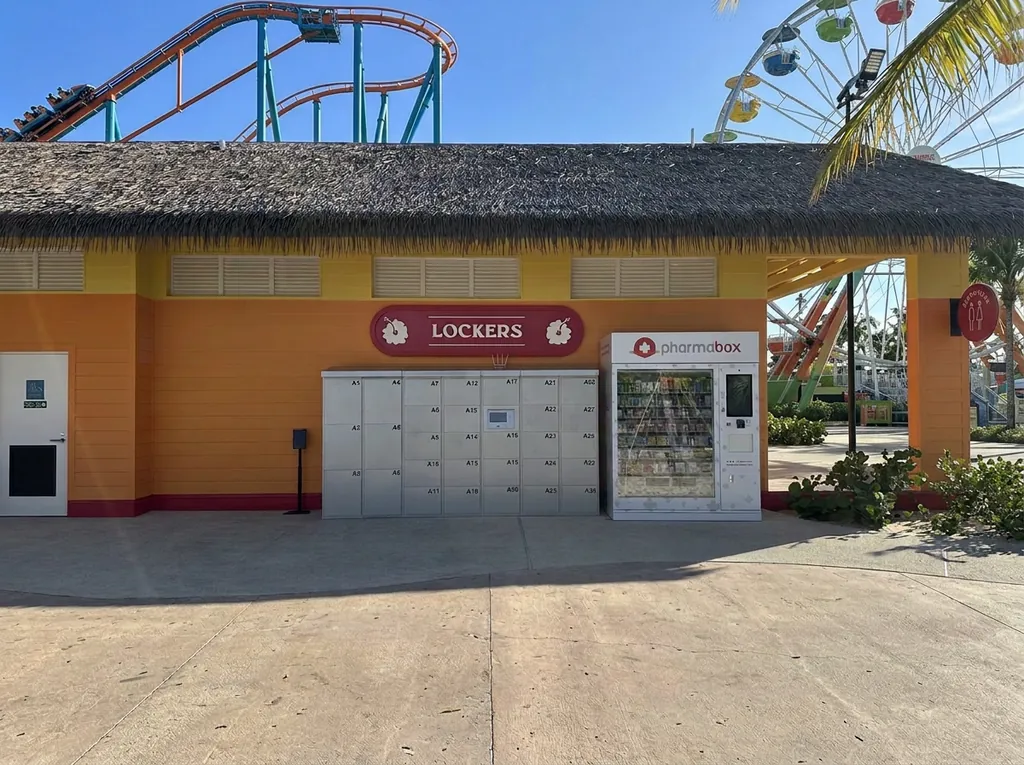
Most parks price amusement park locker rental as a flat all-day rate with two or three size tiers, and that is usually the right call. All-day pricing is simple to explain at a kiosk, it removes the friction of repeat payments, and it maximises the chance a guest rents at all. Per-use and hourly models only beat it in specific situations: single-ride storage banks, short-dwell attractions and venues where turnover matters more than capture.
Below is how to set the number, how to tier it, when to flex it, and how to model the trade-off between price and the share of guests who actually rent.
How much to charge for amusement park locker rental
Price an all-day rental so it reads as a small fraction of a day ticket, not a second admission. Set a standard size first, add a larger tier at roughly 1.5 to 2 times that price, then test in one-dollar steps across comparable operating days. Measure revenue per locker per day, not price alone — a higher rate that empties your bank earns less.
That last point is the one operators miss. The metric that should drive every decision about how much to charge for locker rental is revenue per locker per day (RPLD): total locker revenue divided by the number of compartments in service. It captures price, capture rate and turnover in a single number, and it is the only figure that tells you whether a price increase actually helped.
Flat day rate vs. per-use vs. hourly: pick the model before the price
| Model | Best for | Guest experience | Operator trade-off |
|---|---|---|---|
| Flat all-day rate | Main entry banks, water parks, family parks | Pay once, open and close all day | Highest capture, lowest turnover; needs more compartments |
| Per-use (ride lockers) | Coaster queues, single-rider storage, go-karts | Pay each time, or free for a short window | High turnover from few compartments; friction on repeat rides |
| Hourly / time-tiered | Mixed-dwell venues, parks with evening events | Cheap entry price, scales with stay | More support questions; overstay and overage handling needed |
| Bundled / included | Season pass perks, cabana and VIP packages | Feels free at point of use | No direct revenue line; drives pass value and capture |
Flat all-day rate
This is the default because it matches how guests behave. They arrive with a bag, want it gone for eight hours, and will not stand in line four times to pay again. Unlimited open/close during the rental window is the feature that makes the price feel fair — if a guest can only open the door once, you have sold storage, not convenience.
Per-use and ride lockers
Ride lockers sit at the queue entrance for loose-article rules on coasters and water slides. Two approaches dominate: a short free window (long enough to ride and return) with a charge beyond it, or a small flat fee per use. Some operators sell an all-day pass that unlocks ride lockers across the park for a single fee, which turns scattered banks into one product rather than a dozen separate transactions (The Locker Network markets a feature along these lines). The free-window model protects throughput and guest sentiment at the ride; the paid model monetises it but risks queue abandonment and loose articles hidden in bushes.
Our recommendation: make queue-side ride lockers free or near-free for a timed window, and earn your revenue on the large all-day banks at the entry plaza, locker row and water attractions.
Hourly and time-tiered
Hourly works where dwell time genuinely varies — parks with separate evening ticketing, concert nights or shared campuses. Price it so four to five hours equals your all-day rate, then make the all-day option the obvious upgrade on the kiosk screen. If you offer hourly, you need an overstay policy written into the terms and enforced by the software, or you will be releasing contents manually at close.
Size-based locker rental pricing: build a ladder, not a single price
A single size forces every guest into the same price and wastes cubic volume. Three tiers is the practical maximum for a self-service kiosk:
- Small — phones, wallets, keys, sunglasses. Highest turnover, lowest price, ideal next to rides.
- Standard — a backpack, towels, a change of clothes. This is your volume seller and your reference price.
- Large / family — a stroller bag, multiple backpacks, a cooler bag. Price at 1.5–2x standard; it sells to groups who are splitting the cost anyway.
Set the door mix from observed demand, not symmetry. A park with heavy stroller and family traffic may run 50% standard, 30% large, 20% small; a thrill park with strict loose-article rules skews small. Our sizing guide for water parks walks through the counting method, and the same logic applies to dry parks with lower per-guest bag volume.
One pricing rule that consistently helps: never let the large tier look like a penalty. If the jump from standard to large is more than double, groups split into two standard lockers, you lose the premium and you burn two compartments instead of one.
Peak and dynamic pricing: use it carefully
Park pricing has long varied by day type and admission type — the Bureau of Labor Statistics builds its amusement park index from separate average prices for daily, weekly and season admissions, with food, merchandise, games and other services tracked separately (BLS). Locker rental pricing can follow the same logic, but with two guardrails:
- Flex by day type, not by hour. Weekend, holiday and event-day rates are easy to explain and easy to sign. Prices that move hour to hour generate complaints and front-line escalations.
- Cap the premium. A peak rate meaningfully above your base starts to read as gouging on the exact days your capacity is tightest and your guests are most stressed.
The stronger lever on peak days is usually availability, not price. If your bank sells out by 11:30 a.m., you are leaving money on the table that no price increase recovers — add compartments or add a satellite bank. Demand across the sector is not shrinking: the global amusement park market was valued at roughly $92.1 billion in 2025 with forecasts to about $152.7 billion by 2035 (Market.us), so sizing for today's peak tends to under-serve next season.
Price vs. capture rate: the trade-off, with an illustrative model
Here is the model to build in a spreadsheet before you pick a number. The figures below are illustrative round numbers, not benchmarks — plug in your own attendance and observed capture.
Assume 10,000 guests on a good operating day and a bank of 400 standard compartments. With all-day rentals, realistic turnover is about 1.2 rentals per compartment, so capacity is roughly 480 rentals.
| All-day price | Capture rate (illustrative) | Rentals demanded | Rentals served (480 cap) | Gross revenue | RPLD |
|---|---|---|---|---|---|
| $10 | 8% | 800 | 480 | $4,800 | $12.00 |
| $15 | 6% | 600 | 480 | $7,200 | $18.00 |
| $20 | 4.5% | 450 | 450 | $9,000 | $22.50 |
| $25 | 3% | 300 | 300 | $7,500 | $18.75 |
Three lessons fall out of this shape:
- Underpricing with a small bank destroys revenue. At $10 you turn away 320 guests who wanted a locker, and every one of them is now a service complaint.
- The optimum sits where demand just fills capacity. At $20 the bank clears without stranding guests. That is the price to hold until you add compartments.
- Adding compartments changes the answer. Double the bank and the $15 row suddenly outperforms. Price and capacity must be solved together, which is why we model them in the same sheet in our venue locker ROI breakdown.
To estimate your own capture rate before launch, start from bag-carrying guests rather than total attendance, and sanity-check against industry research collections such as the Cornell amusement industry guide rather than anecdote.
Bundling locker rental with season passes and packages
Bundling converts locker rental from a transaction into a retention tool. Three structures work:
- Included with the top pass tier. Costs you incremental compartments, not cash, and gives the premium pass a tangible daily benefit.
- Discounted pass-holder rate. Lower friction than free, keeps a revenue line, and gives you a reason to capture pass IDs at the kiosk.
- Cabana, VIP and group packages. A large locker included in a cabana booking is near-zero marginal cost and raises the package's perceived value.
If you bundle, reserve a share of compartments so pass holders do not crowd out paying day guests on peak days, and track bundled rentals separately in reporting. Otherwise your RPLD will look like it collapsed when in fact you shifted revenue to admissions.
Who controls amusement park locker rental rates: buying vs. revenue share
The commercial model shapes your pricing freedom. Buying the hardware is a capital expense and keeps 100% of locker revenue and full control of rates; a subscription or revenue-share arrangement moves the cost to operating budget and shares the upside — the same CapEx/OpEx choice vendors in adjacent locker markets describe (Parcel Pending).
Under our locker revenue share program, Storage Lockers covers the hardware and you share the income, which suits parks that want to test amusement park locker rental demand before committing capital. If you prefer to own the asset, see how much smart lockers cost and the side-by-side in revenue share vs. buying. Either way, insist that pricing changes are self-service in the dashboard — a rate you cannot change without a support ticket is a rate you will never optimise.
Pricing checklist: what to settle before opening day
- Chosen model per zone (all-day at entry, timed free window at rides)
- Two or three size tiers with a sensible price ladder
- Unlimited open/close included in the all-day rate
- Day-type pricing rules, with a capped peak premium
- Pass-holder and package rules, with reserved inventory
- End-of-day release and lost-property process documented
- Reporting that shows RPLD, capture rate, turns and sell-out time by bank
- Ability to change prices yourself, by zone, in minutes
Storage Lockers runs keyless banks in demanding public environments, including beach lockers at Celebration Key, an airport luggage locker wall in Oslo and an arena locker wall in Montreal. See the amusement and theme park page for configurations, or browse products for door mixes and kiosk options.
Frequently asked questions
How much should an amusement park charge for locker rental?
Set a standard all-day rate that reads as a small fraction of a day ticket, then add a large tier at 1.5–2x. The right number is the one that fills your bank without selling out by late morning, so test in one-dollar steps and judge by revenue per locker per day.
Should ride lockers be free?
Queue-side ride lockers are usually best offered free for a timed window long enough to ride and return. It protects throughput, keeps loose articles off the platform, and leaves your revenue to come from the larger all-day banks at the entrance and water attractions.
Can we change amusement park locker rental prices during the season?
Yes, and you should. Smart locker software lets you adjust rates by zone and day type, so you can raise prices on sell-out days and test lower rates on quiet midweek days. Change one variable at a time and compare like-for-like attendance days.
Does including lockers with a season pass cost us money?
It shifts revenue rather than losing it, provided you reserve inventory so pass holders do not crowd out paying day guests. Track bundled rentals as a separate line so your locker reporting still shows true paid demand.
Is revenue share or buying better for locker rental pricing?
Buying gives full control of rates and keeps all revenue, but ties up capital. Revenue share removes the hardware cost and is the lower-risk way to prove demand at a new park, as long as the agreement lets you set and change prices yourself.
Next steps
Tell us your attendance profile, bag-carrying mix and planned locker locations, and we will model price tiers, compartment counts and projected revenue per locker per day for your park. Get a quote or book a call to walk through the numbers with our team.
Sources
Planning lockers for your venue?
Tell us about your site and we'll recommend a configuration and commercial model.