
How to Make Money With Lockers: A Venue Owner's Guide
By Storage Lockers team · Published October 26, 2026
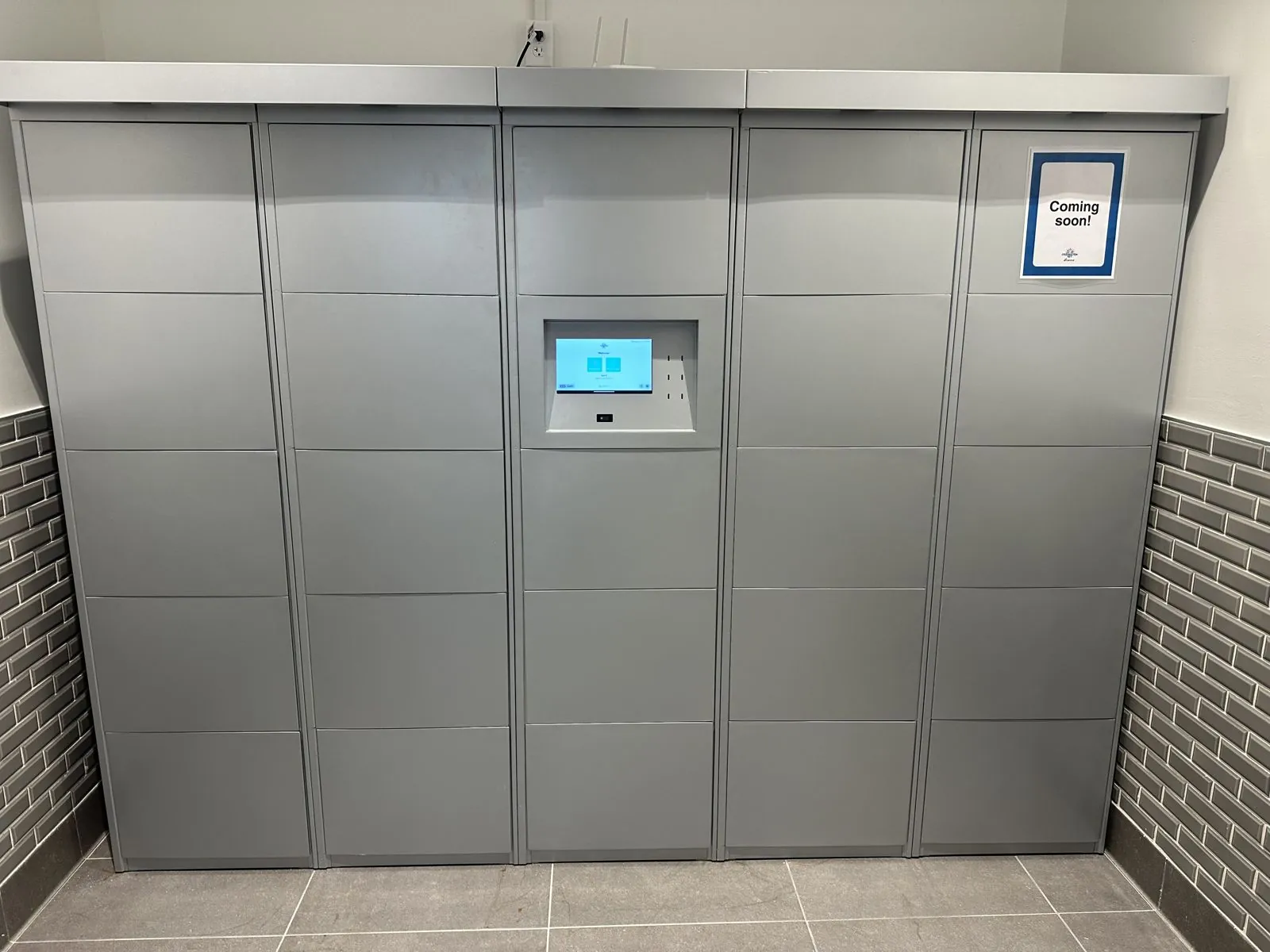
Lockers make money when a venue has three things at once: guests carrying things they don't want to carry, a reason they can't leave those things in a car, and a place to put lockers that people walk past anyway. If you have all three, the question of how to make money with lockers becomes an arithmetic problem, not a gamble. This guide walks through where revenue generating lockers earn, the formula for forecasting it, the costs that quietly erode it, and whether to buy the hardware or run a revenue share.
How to make money with lockers: the short answer
You make money with lockers by charging guests a day rate or hourly rate for secure, self-service storage at a high-traffic point in your venue. Revenue equals daily guests × capture rate × average price × operating days. Venues either buy the hardware and keep all rental income, or use a revenue-share program with no capital outlay and a split of income.
Where lockers actually earn
Not every venue supports a locker business. The pattern that works is a bag problem plus a dwell problem: guests arrive with belongings and then do something — swim, ride, dance, queue, travel — that makes carrying those belongings unpleasant or impossible.
| Venue type | Why guests rent | Typical pricing model | Demand pattern |
|---|---|---|---|
| Water parks | Nowhere dry or safe for phones, towels, shoes | All-day rate, size tiers | Seasonal, heavy weekend peaks |
| Theme parks & attractions | Ride restrictions on loose articles | All-day with re-entry | Steady across operating days |
| Stadiums & arenas | Bag policies, coats, no cloakroom capacity | Per-event flat rate | Spiky, tied to event calendar |
| Festivals & events | Multi-day camping, phone charging, merch | Per-day or full-event | Short, intense, high capture |
| Airports & train stations | Layovers, luggage between check-in and flight | Hourly or per-24h tiers | Continuous, all-year |
| Zoos, museums, aquariums | Strollers, coats, school groups | Low flat rate | Weather and school-calendar driven |
| Gyms & workplaces | Daily storage, parcel and asset handling | Membership-included or subscription | Predictable weekday rhythm |
Two of those categories are worth separating out. Transit hubs produce the highest utilisation per door because demand never really stops — our own airport luggage locker wall in Oslo sits in that category. Event venues produce the highest capture rate per guest but only on event days, which is why an arena locker wall in Montreal is sized around the event calendar rather than annual footfall. Beach and resort settings, like the lockers at Celebration Key, sit in between: strong seasonal peaks, very high willingness to pay when guests are in swimwear with nowhere to put a phone.
The workplace and gym end of the market is a different business model — recurring rather than transactional — but it is growing for the same reason. Pitney Bowes reports that over 61% of enterprises plan to invest in smart locker technology, largely to automate parcel and asset handoffs. The wider market is expanding too: MarketsandMarkets valued the global smart locker market at USD 2.1 billion in 2023, forecast to USD 3.6 billion by 2028 at an 11.6% CAGR, and a meta-analysis of competing forecasts puts 2026 estimates between $3.71 billion and $7.73 billion depending on scope.
The locker revenue formula
Use this for any venue type:
Annual locker revenue = daily guests × capture rate × average price per rental × operating days
Then add a second term if your lockers turn over more than once a day (common in transit and hourly-rate settings):
Revenue = doors × turns per day × average price × operating days
Use the first formula when demand is guest-driven and lockers sit idle most of the day. Use the second when demand exceeds supply and the constraint is doors, not footfall. If your capture-rate model produces more rentals than you have doors, you are supply-constrained and should be sizing up, not forecasting down.
An illustrative worked example
Illustrative only — use your own figures. A seasonal attraction runs 120 operating days with 5,000 guests per day. You assume a 4% capture rate and a $12 average rental.
- 5,000 × 4% = 200 rentals per day
- 200 × $12 = $2,400 per day
- $2,400 × 120 = $288,000 per season in gross rental revenue
Change the capture rate to 6% and you add roughly $144,000. Change the price by $2 and you move about $48,000. That sensitivity is the whole game: capture rate and price move revenue far more than door count does, which is why placement and signage matter more than hardware specs.
What drives capture rate
Capture rate is the share of guests who rent. It is the number most operators guess at and the one you should design around. Vpod's venue locker performance guide lists placement, pre-arrival messaging, clear signage and pricing, low-friction digital booking, cashless payment, compartment size mix and peak-time availability as the main levers on locker adoption and revenue per visitor. Location is decisive: as one parcel-locker operator puts it, poorly placed lockers turn cost-saving infrastructure into wasted capital.
Practically, that means:
- Put rental lockers on the natural path between the entrance and the first thing guests do — not in a back corridor.
- Tell guests lockers exist before they arrive, in booking confirmations and the venue app.
- Price in whole, obvious numbers and show the price on signage, not just on the kiosk.
- Mix sizes. One oversized door that fits a suitcase earns more than two small doors nobody can use.
- Accept cards and wallets only. Cash handling costs more than it collects — see coin operated lockers vs smart lockers.
The cost side: what you actually keep
Gross rental revenue is not profit. Build your model with these lines:
- Hardware and installation. The largest single number if you buy. See how much smart lockers cost for the components that drive price.
- Site works. Power, data or cellular connectivity, concrete pads or anchoring, weather protection for outdoor banks.
- Payment processing. A percentage of every transaction plus a per-transaction fee. On low-ticket rentals the fixed fee matters more than the percentage.
- Software and support. Cloud platform, remote unlock, reporting, PIN and app access.
- Maintenance and spares. Locks, hinges, screens. Budget for it even under warranty.
- Staff time. Someone handles forgotten PINs, lost items and the occasional stuck door. Smart lockers reduce this to minutes rather than a staffed cloakroom shift, but it is not zero.
- Cleaning and seasonal storage for temporary or event deployments.
A sensible rule: forecast revenue conservatively, cost pessimistically, and only then decide on an ownership model. The full line-by-line build is in our venue locker ROI breakdown, which includes the calculator we use in planning sessions.
Buy the lockers or use revenue share?
This is the decision that determines your payback period and your risk.
| Buy outright | Revenue share | |
|---|---|---|
| Upfront capital | You fund hardware and install | Storage Lockers covers hardware |
| Revenue | You keep 100% of rentals | Income is split |
| Risk if demand is soft | You carry it | Shared |
| Best for | Proven, high-volume, year-round demand | New programs, seasonal venues, unproven capture rates |
| Budget treatment | Capital expenditure | Operating line, no capex approval |
| Upgrades | Your call, your cost | Handled under the agreement |
Buying wins when you already know the demand is there and you want maximum long-run margin. Revenue share wins when you can't get capex approved, when the season is short, or when you simply don't have a reliable capture rate yet and would rather prove it before committing. Many venues start on revenue share, measure a real capture rate for a season, and then decide. We compare both models in detail in locker revenue share vs. buying.
Pricing, sizing and the second revenue layer
Once the base rental income works, there are additional ways to make money with lockers that cost almost nothing to add:
- Tiered sizing. Small, large and oversized doors let you price by value rather than by door.
- Demand-based pricing. Higher rates on peak days, lower midweek, where it suits your guest expectations.
- Bundling. Include storage in cabana, hospitality or premium ticket packages so the locker is sold at full margin inside a higher-value product.
- Sponsorship and branded locker walls. Vpod's guide flags sponsorship and branded areas among the practical commercial options for venues.
- Charging lockers. Phone charging adds a reason to rent at events and festivals where power is scarce.
Sizing matters because an undersized bank caps revenue on your best days and an oversized bank ties up capital. For a worked sizing method, see how many lockers a water park needs, and for benchmark day rates by attraction type, amusement park locker rental pricing.
The mistakes that kill locker revenue
- Hiding the lockers. If guests have to ask where they are, your capture rate is already halved.
- One door size. Guests with backpacks and guests with suitcases are different customers.
- No pre-arrival messaging. The cheapest capture-rate gain available to any venue.
- Cash-only or key-based systems. Lost keys, cash collection and manual resets consume the margin.
- No data. If you can't see utilisation by day, hour and size, you can't price or size the next phase. Insist on reporting from any vendor.
- Sizing for the average day. Size for a strong day and accept idle doors midweek; you only get one chance at peak demand.
Frequently asked questions
Is a locker business profitable for a venue?
It can be, provided guest volume, capture rate and price clear your fixed costs. The economics work best at venues where guests must store belongings rather than merely prefer to. Model it with the revenue formula above before committing capital, and use the ROI breakdown to pressure-test the cost side.
How much do venues charge for rental lockers?
Pricing varies by venue type and dwell time: all-day flat rates at parks and attractions, per-event rates at arenas, hourly or per-24-hour tiers at transit hubs. Size tiers let you charge more for larger doors. Check local comparable venues, then test — price is one of the strongest levers on total revenue.
Do I need to buy the lockers to earn revenue from them?
No. Under a revenue-share program, Storage Lockers covers the hardware and you share the rental income, which removes the capital approval hurdle entirely. It suits seasonal venues and first-time programs where the capture rate is still unproven.
How many lockers should I install to start?
Size from your strong-day guest count and a conservative capture rate, not your annual average. Starting slightly under and adding a second bank once you have utilisation data is usually safer than overbuilding. Modular systems make phased expansion straightforward — see our locker products.
What makes revenue generating lockers fail?
Almost always placement and visibility rather than hardware. Lockers set away from guest flow, with no signage or pre-arrival messaging, sit empty while the venue concludes that lockers "don't work" there. Fix the location and the communication before changing anything else.
Next steps
Send us your guest numbers, operating days and site layout and we'll build a revenue and cost model for your venue — including a buy versus revenue-share comparison. Get a quote or book a call with the team.
Sources
- Smart Locker Market Size, Share, Trends and Growth Analysis 2033
- Smart Locker Market 2026: Size, Cost & Growth Trends - ForwardPass
- Smart Lockers for Business: The Ultimate Guide | Pitney Bowes
- Best Practice Locker Revenue Guide Landscape - YouTube
- Choosing parcel locker locations - Why it matters and how to get it right
Planning lockers for your venue?
Tell us about your site and we'll recommend a configuration and commercial model.